Source Food Grade Silicone Popsicle Mold for Ice Cream, Cake, and Chocolate
Compare 30 listings for food grade silicone popsicle mold options from China suppliers. Buyers can review specifications like size, certifications, and customization features to select the best molds for making ice cream, cake, or chocolate.
Key considerations
Products List




Comprehensive Sourcing Guide
Strategic Sourcing Guide for Food Grade Silicone Popsicle Molds
Understanding Product Specifications and Material Integrity
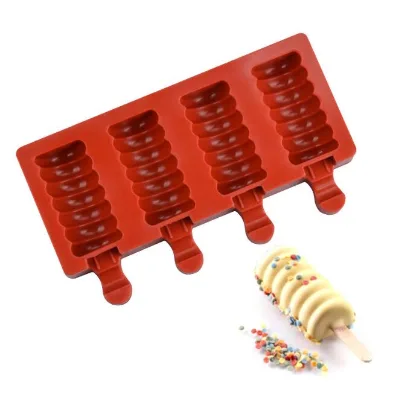
When sourcing food grade silicone popsicle molds, the primary objective is to identify products that maintain structural integrity under thermal stress while ensuring safety for direct food contact. The core material for these items is consistently identified as silicone, a polymer known for its flexibility and durability. Buyers must verify that the specific silicone formulation meets food safety requirements, as not all silicone is created equal. The observed product attributes indicate a variety of configurations, including rectangular and wave shapes, which influence the final geometry of the frozen treat.
The physical dimensions of the molds vary significantly across different models, a critical factor for logistics and storage. For instance, specific model numbers such as GP-G0041 and GP-G0042 are associated with distinct standard dimensions. One observed specification lists a standard size of 161513cm, while another model, GP-E0021, is noted with dimensions of 16*3.5 Cm. Another variant, GP-E0020, features a heat resistance range of -40 to +230 degrees Celsius, a specification that buyers should treat as a key performance indicator for thermal cycling. The weight of the molds also varies, with observations ranging from 25g to 200g, suggesting differences in wall thickness and material density.
The capacity of the molds is another vital specification. Some units are designed with a specific cell count, such as sixty-five five cells, while others are defined by volume, like a 7-hole configuration with 350 ml capacity. The shape of the mold, whether rectangular or wave, directly impacts the ease of removal and the aesthetic appeal of the final product. Buyers should request detailed dimensional drawings for each model to ensure they align with their packaging and distribution requirements. The presence of a cover, noted in some product attributes, adds a layer of protection against contamination and freezer burn, which is a significant value-add for commercial users.
Compliance Verification and Certification Standards
Ensuring that the silicone popsicle molds are safe for food contact is the most critical compliance step in the procurement process. The supply chain for these items must be backed by verifiable certifications that confirm the absence of harmful substances. The observed data highlights several key certifications that are relevant to this category. FDA (Food and Drug Administration) certification is frequently cited, indicating compliance with United States food contact regulations. Similarly, LFGB (Lebensmittel- und Futtermittelgesetzbuch) certification is mentioned, which represents the stringent German food safety standards often required for export to the European Union.
SGS certification is also a recurring attribute in the product listings. SGS is a leading inspection, verification, testing, and certification company, and their involvement suggests that the product has undergone third-party testing for safety and quality. When evaluating suppliers, buyers should explicitly request copies of these certificates and verify their validity dates. It is important to note that while ISO 9001 and ISO 13485 are mentioned in general industry contexts, they should not be assumed as present without specific verification from the supplier. The same applies to BSCI, CE, and RoHS; these should only be claimed if the supplier provides current, valid documentation.
The material safety is further reinforced by the heat resistance specifications. A range of -40 to +230 degrees Celsius indicates the mold can withstand the extreme cold of a freezer and the high heat of a dishwasher or oven, provided the manufacturer's instructions allow. This thermal stability is a proxy for the quality of the silicone. Buyers must ensure that the "food grade" claim is backed by these specific test results. The presence of a "Custom Logo" feature does not compromise safety, but the inks or printing methods used must also be food-safe and non-toxic, which should be confirmed through the supplier's quality assurance documentation.
Cost Drivers and Pricing Dynamics
The pricing of silicone popsicle molds is influenced by a complex interplay of material costs, customization requirements, and order volume. The observed price range in the market spans from $0.01 to $8.88 USD, a wide variance that reflects differences in quality, complexity, and order size. Several factors drive these costs. The weight of the mold is a direct cost driver; heavier molds, such as those weighing 200g, typically contain more raw material and thus command a higher unit price compared to lighter 25g units. The complexity of the shape, such as wave patterns versus simple rectangles, also affects the mold tooling costs, which are often amortized into the unit price.
Customization is a significant cost variable. The availability of custom logos and custom packaging adds to the production time and expense. Suppliers offering "Customer Logo Acceptable" services may charge a setup fee or a higher unit price for the first order. The packaging type also impacts the final cost. Products packaged in single OPP bags are generally less expensive than those shipped in cartons or boxes, which require additional materials and labor. The "Single" packaging attribute suggests a minimalistic approach, while "Carton" or "Box" packaging implies a more robust solution for retail or bulk distribution.
Order volume is perhaps the most influential factor in determining the final price. The observed MOQ (Minimum Order Quantity) ranges from 1 to 3000 units. Buyers ordering at the lower end of this spectrum, such as 100 pieces, may face higher per-unit costs due to the fixed costs of production setup. Conversely, larger orders, such as those approaching 3000 units, benefit from economies of scale. The supply ability of 10,000 pieces per month indicates that suppliers have the capacity to handle large orders, but buyers should confirm lead times for such volumes. Payment terms, including T/T, Trade Assurance, LC, and PayPal, also influence the financial dynamics, with different terms carrying different risk profiles and potential cost implications for the buyer.
Typical Applications and Usage Scenarios
Silicone popsicle molds are versatile tools designed primarily for the creation of frozen treats, but their applications extend beyond simple ice cream. The core usage is defined as making ice cream and popsicles, leveraging the flexibility of the silicone to easily release the frozen product without breaking. The heat resistance range of -40 to +230 degrees Celsius allows these molds to be used in a wide variety of kitchen environments. They are suitable for freezing in standard home or commercial freezers and can often be cleaned in dishwashers or sanitized in ovens, provided the temperature does not exceed the upper limit.
Beyond ice cream, the product attributes indicate usage for making cakes, chocolate, and pudding. This versatility makes them valuable for confectioners and bakeries looking to create unique shapes and presentations. The rectangular and wave shapes allow for a variety of designs, from classic bars to more intricate, visually appealing treats. The capacity of the molds, such as the 350 ml volume, suggests they are suitable for both small individual servings and larger family-sized portions. The "With Cover" feature is particularly useful for preventing freezer burn and cross-contamination, making these molds ideal for commercial food service environments where hygiene is paramount.
The customization options, including custom logos, open up marketing possibilities for brands. Businesses can imprint their logos directly onto the molds or the packaging, creating a branded experience for the end consumer. This is particularly relevant for promotional items or private label products. The "Sixty-five Five Cells" configuration suggests a high-volume production capability, suitable for factories or large-scale catering operations that need to produce hundreds of units simultaneously. The ability to produce various shapes and sizes allows buyers to diversify their product lines and cater to different market segments, from health-conscious consumers seeking fruit-based popsicles to luxury markets looking for premium chocolate treats.
Supplier Evaluation and Geographic Considerations
Evaluating suppliers for silicone popsicle molds requires a careful assessment of their location, production capacity, and reliability. The observed data indicates that the majority of suppliers are located in China, with specific regions like Guangdong and Zhongshan being prominent hubs. Guangdong, in particular, is known for its robust manufacturing infrastructure and expertise in silicone products. The origin "China Guangdong" and "Zhongshan Guangdong" suggests a concentration of specialized factories in these areas. Buyers should verify the specific factory location to ensure they are dealing with a manufacturer rather than a trading company, as this can impact quality control and communication.
The supply ability of 10,000 pieces per month is a key metric for evaluating a supplier's capacity. This figure indicates that the supplier can handle moderate to large orders, but buyers should confirm if this is a peak capacity or a standard monthly output. Lead times are not explicitly provided in the data, so buyers must request this information during the negotiation phase. The ability to accept custom orders, including custom logos and packaging, is a strong indicator of a flexible and capable supplier. However, buyers should also inquire about the supplier's quality control processes, especially regarding the consistency of the silicone material and the accuracy of the dimensions.
Payment terms such as T/T, Trade Assurance, LC, and PayPal offer various levels of security. Trade Assurance, in particular, provides a layer of protection for the buyer, ensuring that payment is only released once the order is completed according to specifications. The presence of multiple payment options suggests that the supplier is experienced in international trade and understands the needs of global buyers. Buyers should also check for any history of disputes or negative feedback, although this information is not available in the current dataset. The focus should be on suppliers who can demonstrate a consistent track record of delivering high-quality, food-grade silicone products.
Quality Control and Long-Term Procurement Strategy
Implementing a robust quality control (QC) strategy is essential for maintaining the integrity of the silicone popsicle molds throughout the supply chain. Buyers should establish clear acceptance criteria based on the observed specifications, such as the heat resistance range, weight tolerance, and dimensional accuracy. Regular inspections, including pre-shipment inspections, are recommended to ensure that the products meet the agreed-upon standards. The presence of certifications like FDA, LFGB, and SGS should be verified through third-party audits or by requesting recent test reports.
Long-term procurement considerations involve building a sustainable relationship with suppliers who can consistently deliver high-quality products. This includes negotiating favorable terms for volume discounts, ensuring timely delivery, and maintaining open communication channels. The ability to customize the product, such as adding logos or changing packaging, should be a standard part of the agreement to allow for market adaptation. Buyers should also consider the environmental impact of their procurement, looking for suppliers who use sustainable practices or recyclable materials where possible.
The variability in product attributes, such as the different weights and dimensions, requires a flexible QC approach. Buyers should not assume that all products from a supplier will be identical; instead, they should request samples of each model before placing a large order. This ensures that the specific characteristics of the mold, such as the wave shape or the cell count, meet the buyer's requirements. By focusing on these details and maintaining a rigorous QC process, buyers can mitigate risks and ensure a steady supply of high-quality silicone popsicle molds for their business needs.
| Feature | Observation | Procurement Action |
|---|---|---|
| Material | Silicone | Verify food-grade certification (FDA, LFGB). |
| Dimensions | 161513cm, 16*3.5 Cm, etc. | Request detailed drawings for each model. |
| Certifications | FDA, LFGB, SGS | Request valid certificates and test reports. |
| Customization | Custom Logo, Packaging | Confirm setup fees and minimum order requirements. |
| Origin | China (Guangdong, Zhongshan) | Verify factory location and production capacity. |
| Capacity | 10,000 pieces/month | Confirm lead times for large orders. |
| Packaging | Single, Box, Carton, OPP | Select based on retail or bulk distribution needs. |
FAQs
What certifications do these silicone popsicle molds have?
These molds typically hold FDA, LFGB, and SGS certifications to ensure food safety. Buyers should verify that the specific supplier provides current copies of these certificates before placing an order to confirm compliance with international standards.
Can I customize the logo on the silicone mold?
Yes, custom logos are available for these silicone popsicle molds. Suppliers often accept customer printing requests, but the inks used must be food-safe and non-toxic to maintain product integrity during direct food contact.
What is the heat resistance range for these molds?
The molds can withstand temperatures from -40 to +230 degrees Celsius. This range allows for use in freezers and dishwashers, ensuring the silicone remains flexible and durable during thermal cycling without degrading.
Which shapes are available for the silicone popsicle molds?
Available shapes include rectangular and wave patterns. These designs influence the final geometry of the frozen treat and affect the ease of removal from the mold for both home and commercial users.
How does the minimum order quantity affect the price?
The minimum order quantity ranges from 1 to 3000 units, directly influencing the unit price. Smaller orders may incur higher per-unit costs due to setup fees, while larger volumes benefit from economies of scale.
Where are these silicone popsicle molds manufactured?
Most products originate from Guangdong, China, with specific hubs in Zhongshan. Buyers should verify the exact factory location to ensure they are dealing with a manufacturer capable of maintaining quality control standards.